REAL ESTATE RED FLAGS TO AVOID WHEN SHOPPING FOR PROPERTIES IN LAGOS, NIGERIA
Table of Contents
Buying property in Lagos, Nigeria’s commercial capital, can be both thrilling and daunting. The thought of finally escaping rent, owning a slice of the ever-buzzing city, and securing something tangible for the future is exciting. Yet, beneath that excitement lies a labyrinth of risks — real dangers and real estate red flags every buyer must quickly identify and avoid. From unclear land titles and fake agents to disputed ownership, poor documentation, and flood-prone locations, these real estate red flags can turn your dream investment into a costly mistake. Recognizing them early is key to making safe and profitable property decisions in Lagos.
Buying property in Lagos, Nigeria’s commercial capital, can be both thrilling and daunting. The thought of finally escaping rent, owning a slice of the ever-buzzing city, and securing something tangible for the future is exciting. Yet, beneath that excitement lies a labyrinth of risks — real dangers and real estate red flags every buyer must quickly identify and avoid.
Lagos is the real estate capital of Nigeria, with rapid urban growth and high demand. But it is also a city where countless buyers have been swindled, trapped in endless litigation, or left with incomplete houses built on shaky foundations.
The truth is this: many of the red flags or warning signs in real estate transactions in the Lagos market appear not at the point of purchase, but much earlier — when you’re still shopping for properties. Paying attention to these potential red flags during the early stage of your property search can save you years of financial loss and emotional stress.
In this article, we’ll explore the most critical real estate red flags to look out for when shopping for properties to buy or rent in Nigeria — beginning with one of the most deceptive pitfalls buyers often overlook.

The First Is Beautiful But Empty Paperwork:
Every seasoned property buyer in Lagos has heard of the phrase: “We have a Governor’s Consent.” It sounds official, it looks polished on glossy paper, and often, it is the first thing agents dangle in front of prospective buyers. But here’s the catch: forged or recycled documents are rampant, and it takes due diligence for you not to fall for such deception. If you follow the trends, you will discover that the Lagos State Government has repeatedly warned that many fraudulent developers circulate fake title documents, knowing that most buyers are too eager or too intimidated to verify at Alausa, the state’s land registry.
Imagine a young professional, excited about a property in Ajah or Sangotedo, presented with a beautifully laminated copy of a Certificate of Occupancy to convince her of the genuineness of the property. Of course, she feels reassured. Yet, it is only when she is lucky to get a lawyer that they later discover that the “C of O” was issued to another person years ago and has nothing to do with the land in question. The property seemed legitimate at the shopping stage, but the red flag was there all along: glossy paperwork without verifiable authenticity.
Suggestion: Go to land registry at Alausa to do your due diligence about any property before going ahead with the transaction. This could save you profound regrets in future.
Second Is Ownership That Shifts Like Sand:
Another trap arises from unclear ownership. When you come across a property that different people claim to be owners or represent the owners, you are probably seeing a red flag that you must quickly run away from.
Lagos land often has layered histories, families, communities, and corporate entities with overlapping claims. Agents sometimes gloss over this, insisting the “owner” is abroad or busy, or assuring you that they represent the family. However, without clear identification and proof of authority, such as a power of attorney or a company resolution, you might be dealing with someone who has no right to sell.
It is common to hear stories of buyers who discover, long after paying, that the true landowners never approved the sale. At the shopping stage, if ownership stories shift, if the seller is evasive, or if multiple narratives emerge about who controls the property, that is a subtle red flag that should not be ignored.
What you should do: When you observe such red flags, research thoroughly even to the point of the traditional rulers in charge of the town where the property is located. You will definitely get an accurate information about the land ownership from the Oba or Baale’s palace.
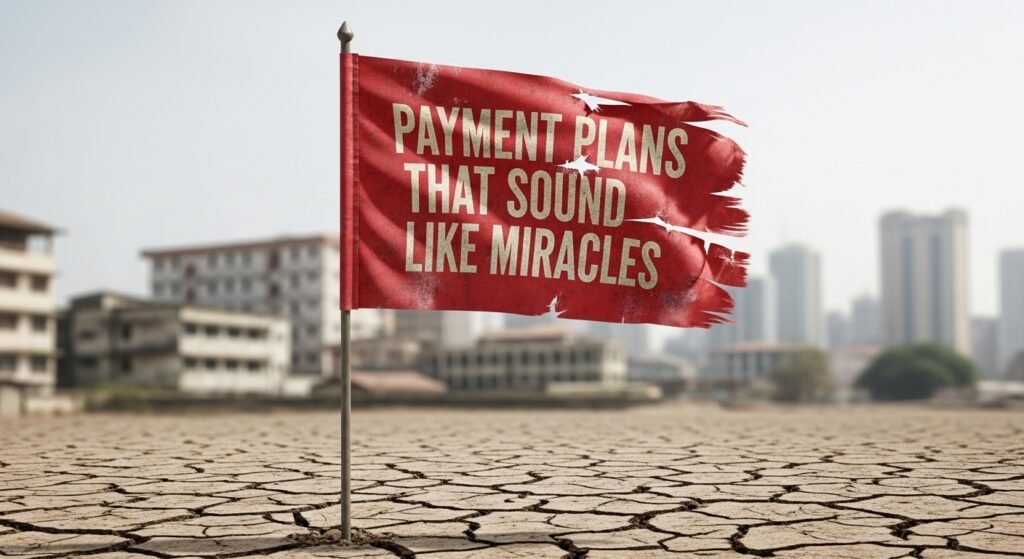
The Third Red Flag Is Payment Plans That Sound Like Miracles:
You will often come across creative adverts when it comes to payment plans for properties in Lagos. “Own your dream home in 12 months, pay little by little,” the adverts proclaim. For many, this seems like the perfect solution. However, here’s where vigilance is key. When payment schedules are not clearly documented, or when agents make verbal promises of “no hidden charges,” that can be a red flag in property acquisition and problems are almost certain to follow.
Consider the buyer who entered into an off-plan agreement with the assurance of a simple monthly payment. A year later, he was hit with extra “development levies,” “legal fees,” and “estate management costs” that had never been disclosed at the start. By then, he was already committed. The red flag here was not the charges themselves, but the vagueness of the payment terms during the shopping stage. A serious developer should provide a written breakdown of all costs upfront.
What to do: Preferably, look for reputable developers and real estate firms to transact with. Firms like PWAN Stars have built a reputation for open and genuine business transactions over the years. Also, even if you do not know the history of the company, demand for a payment plan contained in an agreement that will be signed by both parties.
Another Red Flag That You Cannot Afford To Ignore – Developers Without Footprints:
Let us explain.
Not all developers in Lagos or indeed the real estate market in Nigeria is equal. Some have delivered estates with excellent infrastructure and happy homeowners. Others vanish after collecting deposits and never show up again until they repackage another fraudulent scheme. A subtle red flag at the shopping stage is when a developer cannot point to completed projects, references from previous buyers, or even a single phase of work you can inspect. Sounds commonsensical enough right? But guess what? Many buyers fall into the trap of these developers.
A buyer once asked to see Phase 1 of a project only to be told that all buyers had “privacy agreements” preventing site visits. It turned out there was no Phase 1 at all. Credible developers are proud to showcase their work. If you find yourself being shuttled from office to office without seeing any real evidence of delivery, the caution light should blink red.
What you should do: Demand for evidences of previous jobs delivered. Even if they are yet to complete any project, they must atleast have a site with all necessary documentations in their name. Don’t be a guinea fowl for “new” developers to test with.
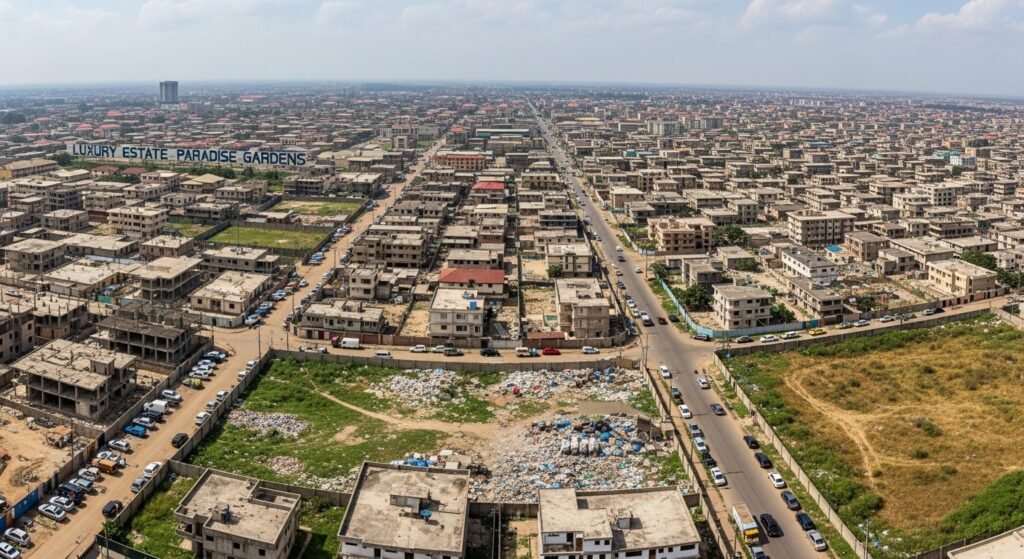
The Fifth Red Flag You Must Not Ignore At The Shopping Stage Is Locations That Sound Better Than They Look
One of the patterns some developers use to sway buyers is exaggeration of location.
Some properties are marketed as being “five minutes from Lekki Phase 1” when in reality they are tucked away an hour down a dusty road. Photoshopped images and grand promises about “future infrastructure” often conceal the real state of things. These are red flags that many people do not pay attention to when shopping for properties.
What should you do? Get on the road and visit the site at different times of the day. Try commuting at rush hour. Check the roads, drainage, and whether the promised schools or shopping complexes are actually under construction or merely dreams on a billboard. Many buyers have discovered too late that “strategic location” was simply a marketing phrase. Do not just rely on what you see in pictures (especially in this age when AI can produce practically everything in real pictures) try to be on ground to see things for yourself.
Do Not Ignore The Digital Mirage:
Technology has made property shopping easier, but it has also opened doors to enhanced deception and fraud. Virtual tours, WhatsApp negotiations, and online payments can be convenient, but they should never replace physical verification. A subtle red flag when shopping for property is when an agent insists that everything can be done digitally and discourages you from visiting the site or insists that payments must be made urgently to a personal account. When you hear things like “You have to pay immediately because some other people are waiting to pay for the property”, run!
While shopping, insist on physical inspection. If you are abroad, appoint a trusted representative or lawyer to visit in your place. A few hours of checking in person can save you years of headache.
Prices That Seem Suspiciously Generous:
This is another red flag that you must pay attention to, while shopping for properties in Lagos.
Price is perhaps the most obvious but most overlooked red flag. Lagos real estate is expensive, yes, but it also has a rhythm. If a property is being offered at a price far below the average for its location, it is wise to pause. The discount may be concealing unresolved disputes, government acquisition, or serious infrastructural gaps.
Developers know that buyers are drawn to bargains, and many scams are dressed up as “limited offers.” At the shopping stage, compare prices in the area. If it is too good to be true, it usually is. Most people fall for things like this because of greed even when they know there is a danger somewhere, they go ahead hoping that everything works out fine.
Do not be greedy. When the price of a property sounds too good to be true, no matter the promotional offers on display, run.
Shopping With Eyes Wide Open
The lesson is simple: the best time to detect red flags is not after you have paid, but when you are still shopping. Ask tough questions. Demand paperwork and verify it. Insist on clear payment structures. Visit the site in person. Compare pricing with the market. Above all, involve a competent property lawyer early in the process.
Shopping for real estate in Lagos should be exciting, but excitement must be balanced with caution. The city is full of genuine opportunities, but it is also full of pitfalls. The difference between those who smile at the end and those who weep in regret often lies in whether they paid attention to the warning signs that were there from the very beginning.
In Lagos, where the demand for housing never sleeps, every property advert looks enticing. But home ownership is too big a commitment to rely on glossy brochures, charming agents, or “once-in-a-lifetime” offers. Red flags appear early, quietly woven into the documents, the ownership stories, the promises, and even the prices. Paying attention while shopping is the surest way to protect yourself.
So, whether you are eyeing a serviced plot in Ibeju-Lekki, a duplex in Sangotedo, or an off-plan apartment on the mainland, remember: the power is in your hands, but only if your eyes stay wide open.