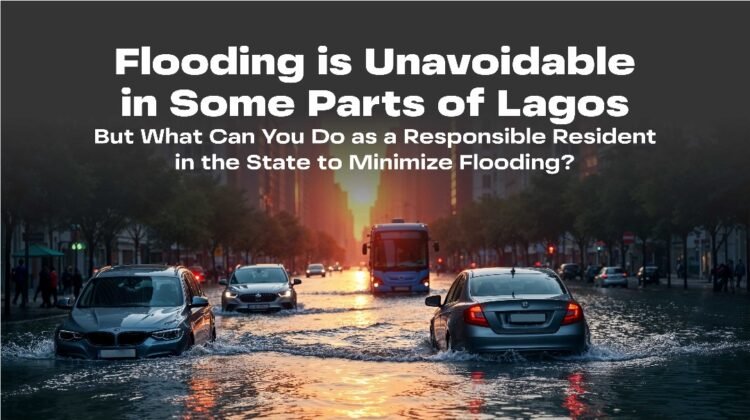
Flooding is Unavoidable in Some Parts of Lagos. But What Can You Do as a Responsible Resident in the State to Minimize Flooding?
Table of Contents
Lagos State has been battling with flooding for decades, and the situation seems not to get better by the year. It is not a surprise. Lagos is a city surrounded by water, hence the appelation, “The City of Aquatic Splendor”. The city is a coastal city with a long coastline and numerous waterways, with the Lagos Lagoon being one of the popular water bodies in the state. Primarily, for this reason, and the accompanying poor drainage system in the state, Lagos is susceptible to flooding during the annual rainfall season.
Recent reports show that flooding remains one of the biggest challenges facing Africa’s largest city. In July 2024, flooding destroyed property and businesses in several parts of Lagos, including the Mushin neighborhood, reminding observers once again that this problem won’t disappear on its own.
While some areas of Lagos will always be at risk of flooding due to their geography and location near the coast, there are many practical things that ordinary residents can do to reduce the impact of floods in their communities. The truth is, many of the flooding problems we see in Lagos are actually made worse by human activities that we can control. But before we suggest what can be done, it’s dig deeper into why Lagos is highly prone to flooding.
Understanding Why Lagos Floods
The drainage system design of Lagos is a disconnected network of shallow gutters that channel wastewater from homes into streets, with canals serving as the ultimate endpoints. This system was never designed to handle the massive population and development that Lagos has today.
The main causes of flooding in Lagos include heavy rainfall that overwhelms the drainage system, poor waste disposal by residents, and people building houses too close to drainage channels thus obstructing the flow of water. In Nigeria, flooding has been attributed chiefly to human factors, such as poor waste disposal practices and management. This means that while we can’t control the rain, we can definitely control many of the factors that make flooding worse.
The Power of Proper Waste Disposal
Proper waste disposal is a problem in Lagos that if well tackled, could save the city a lot of flooding challenges.
One of the biggest things you can do as a Lagos resident is to dispose of your waste properly. This might sound simple, but it makes a huge difference. When people throw trash into gutters, drains, and canals, it blocks the flow of water and causes flooding during heavy rains.
Lagos State government has urged residents to stop the dumping of refuse in unauthorised places, clogging of drains with silt or construction materials. This isn’t just government talk, there’s real evidence that proper waste disposal works. In some areas like Omole, residents have a zero-tolerance policy for dirt, and their drainage systems are notably clean and free of the typical plastic waste seen in other parts of Lagos. This shows that when communities take waste disposal seriously, they can actually prevent many flooding problems.
Here’s what you can do:
– Always bag your waste properly and give it to the assigned waste collectors (PSP operators)
– Never throw anything into gutters, drains, or canals, not even small items like bottle water sachets
– Report illegal waste dumping in your area to local authorities
– Patronize assigned PSP operators and participate in proper waste sorting and disposal programs
Keep Drainage Systems Clear
Many Lagos residents don’t realize that they have a role to play in maintaining the drainage systems in their neighborhoods to prevent flooding. While the government has the main responsibility for big drainage projects, residents can help keep smaller drains and gutters working properly as their own little contribution to the prevention of flooding in the state.
Walk around your neighborhood and look at the gutters and small drains. Are they blocked with sand, leaves, or trash? If so, you can organize with your neighbors to clear them out before the rainy season to prevent flooding. Many flooding problems start with small blockages that grow bigger over time.
Also, if you are doing any construction or renovation work on your property, make sure construction materials don’t end up in drains. Sand, cement, and building debris are major causes of drainage blockages.
Respect Drainage Rights of Way
One major problem in Lagos is that people build structures too close to drainage channels or even directly on top of them. The Lagos State government removed 1,141 illegal structures in the past year to restore Drainage Rights of Way across the state, showing how serious this problem is.
As a responsible resident, you should:
– Never build any permanent or temporary structure on drainage channels
– Avoid building too close to gutters and canals
– If you’re planning to build or renovate, check with local authorities about proper setbacks from drainage areas
– Report illegal structures that are blocking drainage in your area
Plant Trees and Create Green Spaces
This might surprise you, but planting trees and maintaining green spaces in your compound can actually help reduce flooding. Trees and grass absorb rainwater, which means less water flows directly into the already overwhelmed drainage systems.
Experts recommend encouraging green infrastructure that can help control stormwater runoff. Even in a densely populated city like Lagos, small green spaces make a difference.
If you have a compound or yard:
– Plant trees and maintain grass areas instead of cementing everything
– Consider simple rainwater harvesting even just placing containers to collect rainwater helps reduce runoff
– Create small garden beds that can absorb rainwater
Be Smart About Where You Live
While not everyone has unlimited housing choices in Lagos, it’s important to be aware of flood risks when making housing decisions. Experts advise to avoid as far as possible living in an area at risk from flooding.
Some areas of Lagos are simply more prone to flooding than others. If you’re looking for a new place to live or invest in property, research the flooding history of the area. Ask neighbors, check with local government offices, and avoid areas that are very close to the water or in low-lying areas without proper drainage.
Stay Informed and Prepared
Being a responsible resident also means staying informed about weather conditions and flood risks. During rainy season (typically April to October), pay attention to weather forecasts and warnings from Lagos State Emergency Management Agency.
Keep emergency supplies ready during rainy season, including:
– Clean water and non-perishable food
– Flashlights and batteries
– First aid supplies
– Important documents in waterproof containers
– Emergency contact numbers
Work with Your Community
Individual actions are important, but they’re most effective when entire communities work together. Talk to your neighbors about flood prevention. Many successful flood prevention efforts in Lagos have started with concerned residents organizing themselves.
You can:
– Form or join community groups focused on environmental issues
– Organize neighborhood clean-up days to clear gutters and drains
– Work together to report drainage problems to local government
– Share information about proper waste disposal and flood prevention
Support Government Efforts
While residents have important roles to play, the government also has major responsibilities for flood prevention. Lagos state government is working on structural measures such as dredging and cleaning major drainages and canals, as well as construction of dikes, embankments and seawalls.
As a responsible citizen, support these efforts by:
– Paying your taxes so government has resources for drainage projects
– Participating in public consultations about flood prevention projects
– Voting for leaders who take environmental issues seriously
– Reporting drainage problems to appropriate government agencies
The Reality Check
Let’s be honest: flooding will continue to be a challenge in Lagos for many years to come. Recent flood situations across Nigeria have become major humanitarian crises, affecting millions of people. The city’s rapid growth, location near the coast, and aging infrastructure mean that perfect flood control isn’t realistic in the short term.
However, this doesn’t mean we should give up. Every action that reduces flooding, even by a little bit, protects lives and property. When thousands of residents take these simple steps, the cumulative effect can be significant.
Conclusion
Flooding in Lagos is a complex problem that requires both government action and individual responsibility. While you can’t control the weather or single-handedly fix Lagos’ drainage systems, you can make important contributions to flood prevention in your community.
The most important things you can do are proper waste disposal, keeping drainage areas clear, respecting drainage rights of way, and working with your neighbors on flood prevention. These actions might seem small, but they add up to make real differences.
Remember, flooding affects everyone; rich and poor, government officials and ordinary citizens. When we all take responsibility for our part in preventing floods, we create safer, cleaner communities for everyone. The question isn’t whether Lagos will face more flooding, it’s whether we’ll be part of the solution or part of the problem.
Previous Post
HOW PWAN STARS IS REVOLUTIONISING HOME OWNERSHIP IN NIGERIA
MAKING CONSISTENT SALES AS A REALTOR IN LAGOS
3 Exciting Things To Do In Sangotedo: A Community On The Rise