WHAT SEPERATES GOOD PROPERTY INVESTMENT FROM A GREAT ONE LAGOS
Table of Contents
Let’s be honest, in Lagos, almost any property bought in the right area a few years ago has appreciated in value and yielded money. Land that sold for ₦1 million in parts of Ajah in 2018 is now worth well over ₦15 million. A two-bedroom apartment purchased off-plan in Lekki in 2019 for ₦28 million recently resold for ₦65 million. An off-plan one bedroom apartment sold in Sangotedo four years ago is now worth atleast double the price. By those numbers, Lagos real estate looks like it can’t lose.
But it is dangerous to draw that conclusion so fast.
Because while a good investment in Lagos makes you money, a great one builds you wealth – quietly, consistently, and with a lot less stress than most people realise is possible. The difference between the two isn’t luck. It’s all about specific decisions that most buyers either get right accidentally or miss entirely. In this article, we are going to show you how to get it right on purpose.
Good vs Great: What They Both Mean
A good property investment in Lagos might deliver 15 to 20 percent annual appreciation. It sells eventually, the buyer makes a profit, and everyone moves on. That’s a win. No hassles.
A great investment, on the other hand, does something more. The best-positioned Lagos properties deliver capital appreciation of 10 to 25 percent in emerging areas and rental yields of 8 to 20 percent annually depending on location, which can often happen simultaneously. On top of that, it protects your money from inflation, earns passive income while you hold it, and positions you to reinvest from a place of strength rather than desperation.
The gap between those two outcomes is almost never about the property itself. It’s about the five decisions made before a single naira changes hands.
Decision One: Buying in Front of Infrastructure, Not Behind It
This is the single most powerful variable in Lagos real estate, and most buyers get it backwards.
The instinct is to buy where things are already good – where the roads are done, the mall is open, the estate is filled with neighbours. That’s understandable. But the buyers who turn good investments into great ones have learned to read where infrastructure is going, not just where it already is.
In Lagos, property prices in high-demand locations are projected to rise between 15 and 30 percent in areas benefiting from major infrastructure catalysts. The Lagos-Calabar Coastal Highway and the Fourth Mainland Bridge project are actively reshaping accessibility and creating new value corridors along the Ibeju-Lekki and Ajah axes.
The most profitable investments in 2026 will be located along infrastructure corridors, suburban new towns, industrial belts, and mid-income housing clusters. The investors who win are those who follow data, not hype.
Think about what Lekki Phase 1 looked like in 2008. Or what Ajah looked like in 2013. The people who bought then weren’t buying into a finished product. They were buying into a trajectory. That’s the difference.
Sangotedo is a live example of this principle right now. Positioned on the Lekki-Epe Expressway with Novare Mall, growing commercial infrastructure, and consistent developer investment in the corridor, it still offers entry prices that would have seemed impossible in areas with equivalent amenity levels just a decade ago. The area’s transformation from a suburban settlement to a thriving residential hub makes it particularly attractive for early investors seeking significant capital appreciation. Buyers who got in before it became fully established – including those who purchased in PWAN Stars‘ now sold-out Pinnacle series – have seen that principle play out exactly as the data suggested it would.
Decision Two: Choosing the Right Property Type for Your Goal
Not every property that goes up in value is a great investment. Sometimes it appreciates nicely but sits empty for months because nobody wants to rent it. Sometimes it rents well but at yields so low relative to its purchase price that your money would have done better elsewhere.
Great investments match the property type to the intended outcome – deliberately.
Rental yields in Lagos vary significantly by segment. Luxury real estate in Lagos delivers average rental yields of around 5.5 percent annually. In emerging areas like Lekki and Ajah, yields of 6 to 8 percent are attainable. That gap matters enormously if income is your objective.
Here’s the practical breakdown. If you’re buying to live in the property, prioritise livability, community quality, and access – but don’t ignore appreciation potential. If you’re buying for rental income, look at who your tenant will be, what they earn, and whether there are enough of them to keep your unit occupied. If you’re buying purely for capital growth, off-plan in a growth corridor with a credible developer is often the highest-returning strategy – provided the developer actually delivers.
A two-bedroom apartment bought off-plan at ₦40 million could be worth ₦55 to ₦65 million at handover in two years. Held for five years, that same property could reach ₦70 to ₦90 million – representing 40 to 80 percent ROI from appreciation alone.
That’s off-plan in a growth corridor with a developer who completes. Which brings us to the most underrated decision of all.
Decision Three: The Developer Is Not an Afterthought
In most markets, when you buy property, you are primarily buying the property. In Lagos, you are significantly buying the developer’s promise.
Will the building actually be completed? Will it look like what was shown in the brochure? Will the title be clean enough to resell without a lawyer’s headache in five years? Will the estate have functioning infrastructure when you arrive, or just a perimeter fence and a promise? All these are the risks you take when you buy based on the developer’s word.
According to the Nigerian Institution of Estate Surveyors and Valuers, property fraud fuelled by lack of transparency costs investors billions of naira every year, mostly from fake developers selling land without valid titles. Some developers are fully registered, with track records, audited projects, and proven delivery. Others are no more than speculators with flashy flyers and no capacity to deliver once payments are made.
Buyers care more about title integrity, documentation, and legal assurance than ever. Developers with strong track records in these areas stand out.
The practical test is simple: look at what a developer has already built, not what they are promising to build. Visit completed projects. Talk to people who actually bought and moved in. Ask specifically about the title status of the property you are considering and verify it independently at the Lagos State Land Bureau.
PWAN Stars’ track record in the Sangotedo corridor is useful here – not as a sales point, but as an illustration of what accountability looks like in practice. Projects like The Edifice 1 and 2, The Pinnacle, The Pinnacle 2, The Cynosure, and others have been completed and handed over, with buyers taking possession of titled, finished properties. That’s the baseline. Any developer you work with should be able to show you the equivalent.
Decision Four: Timing Your Entry – The Off-Plan Advantage
There’s a window in every property project where the buyer captures the most value. It’s not after completion, when the building is done and the estate is full and everyone can see it’s good. And it’s not at the absolute start, when the developer is unknown and the risk is highest. It’s the middle, when the developer has a verifiable track record, the project is underway or recently launched, and the off-plan price still reflects the early-entry discount.
Off-plan properties offer flexible payment structures, often allowing 12 to 24-month payment plans. By the time the project is completed, local prices typically rise – meaning off-plan buyers lock in today’s price while benefiting from tomorrow’s market.
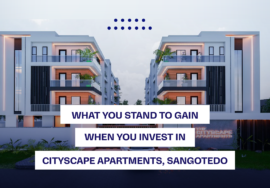
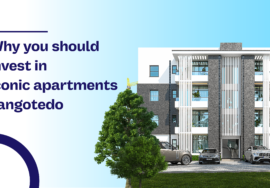
This is the window PWAN Stars’ current Sangotedo projects – The Edifice, The Cityscape Apartments, The Splendour Residences, and The Iconic Apartments – currently occupy. They come from a developer with a verifiable completion record, but they haven’t yet reached the price level that comparable completed stock commands in the corridor. That window closes as each project progresses toward completion.
The buyers who get the best returns aren’t the ones who waited to see how it turned out. They are the ones who did the research, verified the developer, and acted while the pricing still reflected risk – not because the risk was acceptable, but because they had evidence it was already managed.
Decision Five: Patience Is a Strategy, Not a Virtue
Great investors in Lagos real estate share one consistent trait: they understand that property is not a trading instrument. It is a compounding asset. The buyers who try to flip properties for quick returns frequently underperform relative to those who hold intelligently through market cycles.
Nigeria’s National Development Plan allocated US$2.7 trillion for infrastructure projects. The 700km coastal highway stretching from Lagos to Calabar is just one example of the infrastructure projects connecting regions and stimulating economic zones – and each of these projects are adding years, not months, of appreciation runway to surrounding property.
The Lagos real estate market is poised for continued growth driven by demographic trends, economic development, and strategic government initiatives – with opportunities in emerging areas offering promising long-term investment potential.
What this means practically is that a great Lagos property investment almost always looks better at year five than at year two. The buyers who panic-sell when the market slows, or who exit early because they need cash, consistently leave the best returns on the table. The ones who compound – who hold, collect rent, and let appreciation do its work – are the ones whose stories you actually want to hear.
The Five-Point Checklist Before You Buy
If you want to separate a genuinely great Lagos real estate investment from one that just looks good on a brochure, run every deal through these five questions:
1. Is this in front of infrastructure, or behind it? What is being built or planned within 5 kilometres of this property? Are those projects confirmed and funded, or just announced?
2. Does the property type match my actual goal? Am I buying for income, appreciation, or occupancy? Have I chosen the type of property most likely to deliver that outcome?
3. Can I verify this developer’s track record? How many projects have they completed? Can I visit one? What do previous buyers say about the experience?
4. Am I entering at the right point in the project cycle? Am I paying off-plan prices for a property from a developer who has already proven they deliver? Or am I buying after completion, paying a premium for someone else’s early-stage risk?
5. Can I hold this long enough to capture the real return? Do I have the financial stability to hold this property for three to five years without being forced to sell at an inconvenient moment?
Conclusion
Lagos will almost always reward property ownership. The city is too large, too fast-growing, and too undersupplied for real estate to simply stop performing. With Lagos adding 500,000 or more new residents annually and a housing deficit exceeding 2.5 million units, the fundamentals supporting property values continue to strengthen year over year.
But there is a meaningful difference between making money in Lagos real estate and building lasting wealth through it. That difference comes down to five decisions – infrastructure trajectory, property type, developer credibility, entry timing, and patience – made with clear eyes and accurate information.
The good news is that none of these require inside knowledge or unusual connections. They require only the discipline to ask the right questions before you sign anything.
Most buyers skip that step. The ones who don’t are the ones with great investments, not just good ones.