How to Verify Your Certificate of Occupancy in Lagos Without Hassle
Table of Contents
Picture this in your mind: It’s a hot afternoon in November 2025, and you are Chidi, a 35-year-old IT consultant living in Lekki. You’ve just spent ₦65 million on a beautiful two-bedroom apartment in Sangotedo, finally feeling like you’ve achieved some stability in the middle of Lagos’s constant hustle. The seller hands you a shiny Certificate of Occupancy — the famous C of O that’s supposed to mean your land is legally yours.
But as you look at it, a small doubt starts to grow. What if it’s not genuine? What if some Omo Onile (land claimants) show up next week saying the land belongs to their family? Or worse, what if the government suddenly declares the area off-limits because of a zoning issue? In a city like Lagos, where land disputes swallow up about ₦1.5 trillion every year in court cases and lost productivity, taking time to verify your C of O isn’t being paranoid; it’s just being smart.

Lagos, with its 25 million-plus residents and a real estate market valued at over ₦20 trillion in 2025, is a minefield of forged titles. The Lagos State Ministry of Justice reported over 5,000 land fraud cases in 2024 alone, many tied to bogus C of Os. Yet, a verified C of O does not just offer peace of mind; it provides leverage for mortgages (banks demand it for 80% of loans), enhanced resale value (properties with C of O fetch 30-50% premiums), and even family legacy.
But before you talk of verifying your C of O, you need to get one first. So, let’s start at the beginning: processing a C of O in Lagos. This is not a quick errand, it’s a 21-90 day odyssey through bureaucracy, but if you get it right, then verification becomes a breeze.

Step 1: Processing Your C of O – Laying the Foundation for Hassle-Free Verification
Getting a Certificate of Occupancy, better known as a C of O, is one of the most important steps in owning land or property in Lagos. It is not just another paper; it is the legal proof that the land truly belongs to you under the law.
The foundation of this process goes back to the Land Use Act of 1978, which gave state governors the authority to manage all land within their states. In Lagos, everything about land titles is managed by the Lagos State Land Registry, located at Alausa, Ikeja, under the Directorate of Land Services.
Over the years, Lagos State has worked hard to make the process faster and more transparent. In 2015, the government introduced the electronic Certificate of Occupancy (e-C of O), which became even more efficient after the 2023 digital upgrade. Before this system came in, getting a C of O could drag on for six months or more.
Now, for most straightforward applications, it takes between 21 and 60 days to complete. However, delays still happen, especially in places like Ibeju-Lekki, where land disputes and excision reversals have increased by about 20 percent this year alone.
Before you start the process, it is important to understand that getting a C of O is not just about paperwork. It is about laying a solid foundation that can save you from future stress and legal battles.
A properly issued C of O proves that your land has been verified by the state, that it is not under any government acquisition, and that it meets the proper zoning requirements. Without it, your ownership claim is open to challenge at any time.

When you apply for your C of O, you are essentially asking the government to confirm that the land you bought is recognized under state law. The process may feel slow or demanding, but it is much safer to go through it than to take shortcuts.
Every step—every stamp, signature, and inspection—serves a purpose. These details are what make your title strong enough to stand against disputes, fake claims, or government revocations.
The Lagos State Government has also made the process more transparent by introducing an online portal for tracking applications. You can now monitor your file from your phone, instead of joining long queues at Alausa.
This move has reduced unnecessary visits to government offices by nearly 70 percent. Still, the system only works smoothly if you submit the right documents at the start. Missing or incomplete paperwork can set you back weeks, or even months.
To start well, you must know what is required, prepare every document carefully, and follow the approved steps. The next stage explains exactly what you need to gather before you submit your application at Alausa. Skipping any of them might seem harmless at first, but it often leads to delays, rejections, or additional costs later on.
The Required Documents: Your Starting Kit
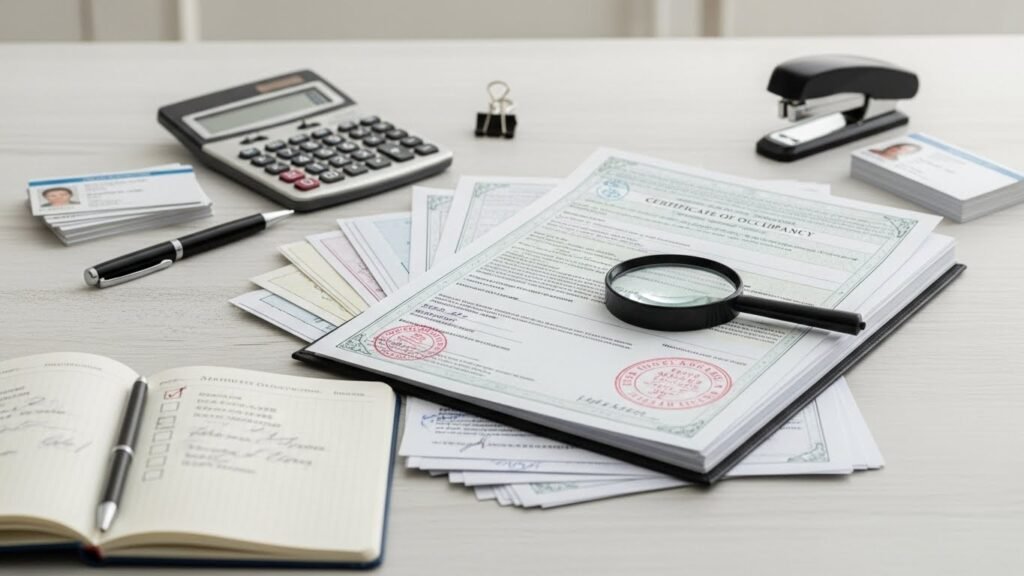
To kick off, gather these essentials; no shortcuts:
– Formal Application Letter: Addressed to the Executive Secretary, Land Use and Allocation Committee (LUAC), Block 13, Room 4, Lands Bureau, Alausa. Include your details, land plot/block number, and purpose (residential/commercial).
– Completed C of O Form (LRF 1): Download from the Lagos State Lands Bureau portal (lands.lagosstate.gov.ng) or buy for ₦5,000-10,000 at Alausa.
– Land Information Certificate: Proves the land’s status; costs ₦10,000-20,000 and takes 7-14 days.
– Four Original Survey Plans: Two on cloth, two on paper (registered surveyor fee: ₦100,000-300,000, depending on plot size).
– Passport Photos: Four recent ones (white background).
– Proof of Purchase: Stamped deed of assignment or excision certificate if from family land.
– Tax Clearance: Yours and (for companies) directors’; plus development levy receipt.
– Sketch Map: Of the site’s location.
For developed land, add approved building plans from Lagos State Physical Planning Permit Authority (LASPPPA).

The Step-by-Step Process: From Submission to Issuance
1. Submit at Alausa: Head to the Lands Bureau with your docs. Pay ₦5,000 (residential) or ₦10,000 (commercial) application fee. Officials log it and issue a reference number; your tracking lifeline.
2. Publication and Search (21 Days): Your name goes in the Lagos State Gazette and ThisDay newspaper (₦10,000 fee) for objections. Simultaneously, title search checks for encumbrances (₦20,000-50,000). Site inspection follows; officials verify boundaries and zoning compliance.
3. Assessment and Payment (7-14 Days): LUAC assesses fees based on land value (Fair Market Value, FMV). For a 600sqm residential plot in Lekki, expect ₦500,000-2 million total (processing ₦100,000; premium 5-10% of FMV; survey ₦200,000). Pay via Remita portal to avoid touts.
4. Approval Chain (5-10 Days): File moves to Deputy Director (endorsement), Director of Land Services (recommendation), Commissioner (approval), and Governor (final sign-off).
5. Registration and Printing (3 Days): Registrar of Titles registers it; e-C of O is generated and printed.
Total cost? ₦300,000-5 million, scaling with location; cheaper in Ogun borders (₦100,000-500,000) than VI (₦2-10 million). Chidi’s story illustrates the grind: In early 2025, he budgeted ₦800,000 for his Sangotedo plot but added ₦200,000 for surveyor tweaks after inspection flagged a boundary overlap. “It felt like herding cats,” he laughs, “but that C of O is my shield now.”
Additional Tip: Use the Lagos State Citizens’ Portal app for tracking—reduces Alausa pilgrimages by 70%. And hire a licensed surveyor early; unlicensed ones cause 40% of rejections.

Why Verification is Non-Negotiable: The Stakes in Lagos’s Land Jungle
With your C of O in hand (a 99-year lease, renewable), the real test begins: Is it genuine? Lagos processes 10,000+ C of Os yearly, but fakes flood the market- cloned docs with altered numbers or backdated issuances. In 2024, the Economic and Financial Crimes Commission (EFCC) busted a syndicate cloning 500 C of Os, costing victims ₦3 billion. Unverified titles lead to demolitions (like the 2023 Maroko evictions, displacing 1,000 families) or “Omo Onile” invasions, which resolve in court 60% of the time—at ₦500,000-2 million per case.
Verification confirms: No revocations, correct ownership chain, and zoning match. It’s mandatory for Governor’s Consent (post-purchase transfer, ₦1-5 million fee) and mortgages. Fatima, a 42-year-old banker, skipped it in 2024 for a ₦45 million Ikorodu buy. Months later, a revocation notice hit—fake excision. She lost ₦10 million in legal battles. “I thought the shiny paper was enough,” she sighs. “Never again.”
Data underscores the urgency: Properties with verified C of Os appreciate 15-25% yearly in hotspots like Sangotedo, versus 5-10% for unverified ones. In 2025, Lagos digitized 80% of records, making checks faster, but touts are still lurking around, charging ₦50,000-200,000 for “expedited” fake C of Os.

Hassle-Free Verification: Step-by-Step Without the Drama
Forget the old days of endless queues. The e-C of O portal (lands.lagosstate.gov.ng) handles 90% digitally as of 2025. Here’s the streamlined path:
Step 1: Prep Your Docs (1-2 Days, Free)
– C of O original or scanned copy (number, date, plot details).
– Your ID (NIN or BVN-linked).
– Survey plan (for cross-check).
Cost: Nil upfront, but photocopies ₦1,000.
Step 2: Online Pre-Check (Instant, ₦0-5,000)
Log into the portal or Lagos State Single Window app. Enter the C of O number for a basic status query. If flagged (e.g., revoked), it pings red.
Step 3: Formal Request at Lands Bureau (1 Day, ₦20,000-50,000)
Visit Alausa (or appoint a lawyer for ₦100,000). Submit:
– Verification form (downloadable, ₦2,000).
– C of O details (plot/block/survey no.).
– Payment via Remita (administrative fee ₦20,000; search ₦30,000).
Officials query the database—takes minutes. They will print a confirmation letter with history (previous owners, encumbrances).
Step 4: Physical/Title Search (3-7 Days, ₦50,000-100,000)
Hire a registered surveyor (NIS member) for on-ground verification confirms beacons match survey. Then, a title search at the Registry scans for liens or disputes. Total: ₦100,000 average.
Step 5: Legal Review and Report (2-5 Days, ₦200,000-500,000)
Engage a property lawyer (NBA-accredited) for holistic vetting—checks against Gazette publications and court records. Output: A due diligence report. Skip this? 30% risk of hidden issues.
Total timeline: 1-2 weeks; cost: ₦300,000-700,000. Use apps like PropTech Verify (launched 2024) for AI-assisted scans—cuts fees 40%.
Stats: Verified C of Os reduce disputes by 75%; unverified ones tank resale by 40%.
Please ensure to Verify Smart today and save your sanity in the future.
Additional Tips:
– Budget Buffer: Add 20% for “surprise” fees—Lagos bureaucracy loves them.
– Avoid Touts: Official channels only; report via 08000022575.
– Tech Hacks: Lagos e-Services app notifies status changes.
– When to Verify: Pre-purchase (saves 90% headaches); post for inheritance.
– Red Flags: Backdated docs, mismatched surveys, no e-seal.
Partnering with Trusted Developers: A Shortcut to Verified Titles
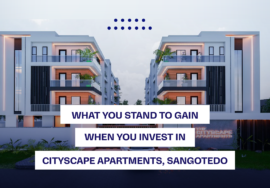
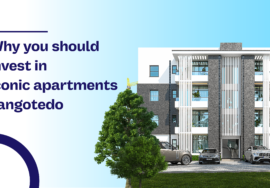
Smart buyers lean on developers who pre-verify. For instance, PWAN Stars Estates & Concerns, with several projects in Lagos, Nigeria, exemplifies this. Their Sangotedo gems—like Cityscape Apartments (2-bed from ₦58 million, C of O included)—come bundled with verified titles, slashing your hassle by 80%. Customer who have bought into their products like The Cynosure Smart Homes have verifiable testimonies to share. PWAN Stars have all documents handled at the time of handing your keys to you; no need for Alausa runs. In a market where fakes lurk, such partners turn verification from chore to checkbox.
Verification isn’t optional; it’s your anchor in Lagos’s storm. Smart investors like Chidi, which i cited at the start of this article, sleep easy, knowing that his C of O is framed as a badge. Yours? Start today. That plot in Sangotedo won’t verify itself.